


BIO-MEC — Biomechanical Force Analysis
A physics-based modelling approach that calculates internal mechanical stresses — compression and shear forces — acting on muscles, joints, and spinal discs during work.
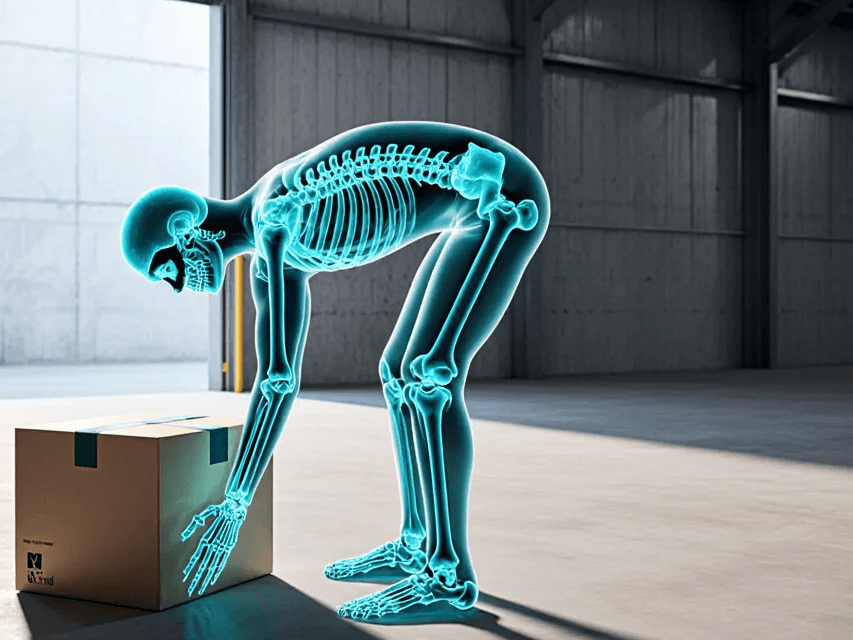
What is BIO-MEC?
BIO-MEC treats the human body as an interconnected system of levers and pivots, calculating the exact forces running through key joints (such as the L5/S1 spinal disc or the shoulder complex). It compares computed internal tissue stresses against established clinical safety limits — for example, the NIOSH spinal-compression limit of 3.4 kN.
When to use BIO-MEC
Use for high-risk, heavy-duty tasks or engineering-validation stages where safety teams must precisely calculate internal tissue stress to justify machinery modifications.
Primary citation: Chaffin, D.B., Andersson, G.B.J., & Martin, B.J. (2006). Occupational Biomechanics (4th ed.). Wiley. (NIOSH 3.4 kN L5/S1 compression action limit.)
What BIO-MEC assesses
The body segments and task variables evaluated in a BIO-MEC assessment.
What it assesses
- Internal joint reaction forces
- Muscle tension requirements
- Spinal compression and shear forces
- Maximum voluntary contraction (% MVC)
Scoring and action levels
Final score range: Force (N / kN) vs biological failure thresholds
Developed by: Newtonian biomechanical modelling
BIO-MEC is coming to Ergocure.ai
BIO-MEC is part of our validated method roadmap. Our engine adds new methods on shared infrastructure — when BIO-MECgoes live it will run from the same on-device capture and certified-ergonomist review as our live methods. In the meantime, tell us your environment and we'll map the live methods that fit today.
BIO-MEC — frequently asked questions
What is BIO-MEC (Biomechanical Force Analysis)?
A physics-based modelling approach that calculates internal mechanical stresses — compression and shear forces — acting on muscles, joints, and spinal discs during work.
What is a good BIO-MEC score?
Force (N / kN) vs biological failure thresholds. A score of Within safety limits is low — low risk of structural tissue failure — while Exceeding thresholds is high and means engineering intervention mandatory.
When should you use BIO-MEC?
Use for high-risk, heavy-duty tasks or engineering-validation stages where safety teams must precisely calculate internal tissue stress to justify machinery modifications.
How does Ergocure score BIO-MEC?
BIO-MEC is on the Ergocure roadmap. Today the same workflow runs on our live methods — AI scores posture from a phone capture and a certified ergonomist validates every result.
Who developed BIO-MEC?
BIO-MEC was developed by Newtonian biomechanical modelling. Chaffin, D.B., Andersson, G.B.J., & Martin, B.J. (2006). Occupational Biomechanics (4th ed.). Wiley. (NIOSH 3.4 kN L5/S1 compression action limit.)
Related assessment methods
Methods commonly used alongside BIO-MEC in a complete ergonomic assessment.
Be first to know when BIO-MEC lands
BIO-MEC is on our roadmap. Request a Pilot of our live methods today, and we'll flag BIO-MEC the moment it goes live.