


JSI — Job Strain Index
Assess the risk of distal upper extremity musculoskeletal disorders — specifically the wrist, hand, and forearm — in jobs involving repetitive or forceful exertions.
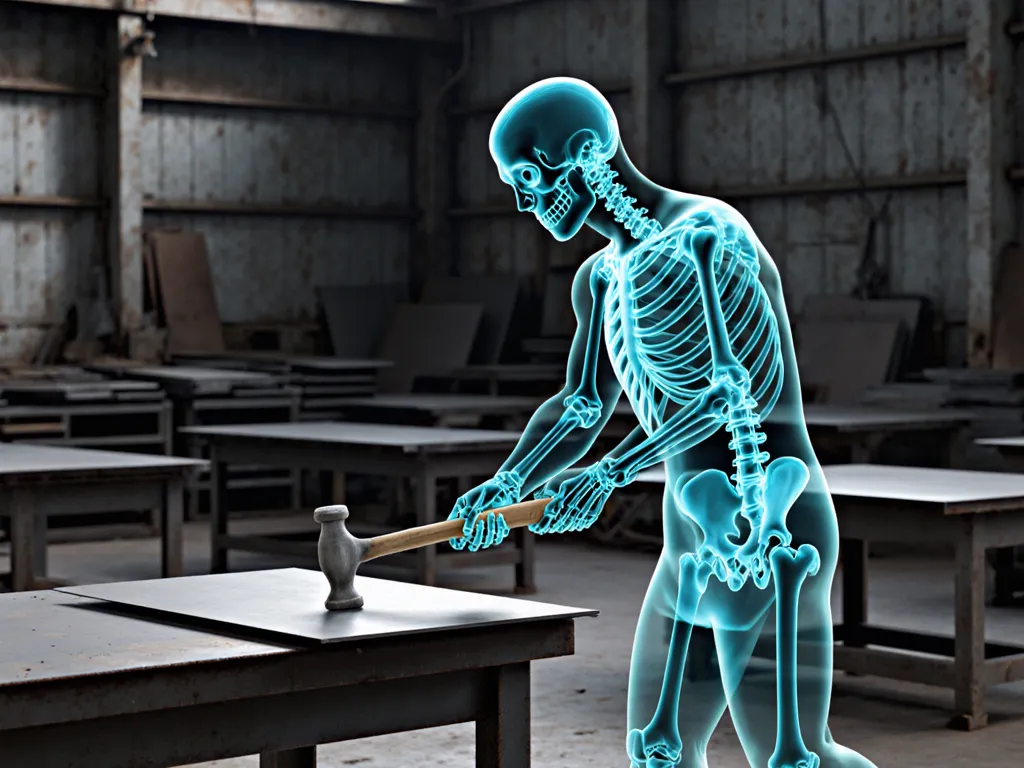
What is JSI?
The Job Strain Index (JSI) was developed by Moore and Garg at the Medical College of Wisconsin as a method to quantify risk of wrist, hand, and forearm disorders. It combines six task variables into a multiplicative score — so when high force, awkward wrist posture, and low recovery overlap, the calculated risk rises sharply. JSI was originally validated against physician-diagnosed disorders in industrial workers.
When to use JSI
Use JSI for tasks involving repetitive hand and wrist exertions — packing, assembly, supermarket scanning, repetitive typing, or any job where the wrist and fingers bear repeated force or sustained posture.
Primary citation: Moore, J.S. & Garg, A. (1995). The Strain Index: A proposed method to analyze jobs for risk of distal upper extremity disorders. American Industrial Hygiene Association Journal, 56(5), 443–458.
What JSI assesses
The body segments and task variables evaluated in a JSI assessment.
Six Task Variables (multiplicative)
- Intensity of exertion (IE) — percentage of maximum strength required
- Duration of exertion (DE) — proportion of cycle with active exertion
- Exertions per minute (EM) — frequency of discrete exertions
- Hand/wrist posture (HWP) — neutral through severely deviated
- Speed of work (SW) — pace relative to comfortable working speed
- Duration of task per day (DD) — hours per day the task is performed
Scoring and action levels
Final score range: Strain Index (SI) — continuous
Developed by: Moore & Garg, 1995
Key characteristics
What makes JSI the right tool for its intended use case.
Six-variable multiplicative model — captures combined effects
Wrist and hand specific — not whole-body
Validated against physician-diagnosed distal upper extremity disorders
Accounts for work pace and daily task duration
Complementary to OCRA for repetitive fine-motor tasks
How Ergocure.ai applies JSI
Ergocure AI uses AI Vision to assess JSI's six task variables from video captures of the task cycle. Intensity of exertion, hand/wrist posture, and speed of work are extracted from frame analysis. Exertions per minute are counted across the sampled clip. Duration and daily task time are input via structured questionnaire. The JSI multiplicative score is computed before ergonomist review.

Captured on any phone, scored for JSI, and validated by a certified ergonomist — face-blurred on-device.
JSI — frequently asked questions
What is JSI (Job Strain Index)?
Assess the risk of distal upper extremity musculoskeletal disorders — specifically the wrist, hand, and forearm — in jobs involving repetitive or forceful exertions.
What is a good JSI score?
Strain Index (SI) — continuous. A score of ≤ 3.0 is safe — probably safe — while > 7.0 is hazardous and means strongly linked to distal ue injury — redesign.
When should you use JSI?
Use JSI for tasks involving repetitive hand and wrist exertions — packing, assembly, supermarket scanning, repetitive typing, or any job where the wrist and fingers bear repeated force or sustained posture.
How does Ergocure score JSI?
Ergocure AI uses AI Vision to assess JSI's six task variables from video captures of the task cycle. Intensity of exertion, hand/wrist posture, and speed of work are extracted from frame analysis. Exertions per minute are counted across the sampled clip. Duration and daily task time are input via structured questionnaire. The JSI multiplicative score is computed before ergonomist review.
Who developed JSI?
JSI was developed by Moore & Garg, 1995. Moore, J.S. & Garg, A. (1995). The Strain Index: A proposed method to analyze jobs for risk of distal upper extremity disorders. American Industrial Hygiene Association Journal, 56(5), 443–458.
Related assessment methods
Methods commonly used alongside JSI in a complete ergonomic assessment.
See JSI in a live assessment
Request a Pilot — we'll run JSI with your team and deliver validated reports in 48 hours.