


OCRA — Occupational Repetitive Actions (Checklist)
Quantify upper-limb exposure to repetitive, high-frequency manual work and predict the risk of work-related musculoskeletal disorders of the shoulder, elbow, wrist, and hand.
What is OCRA?
OCRA (Occupational Repetitive Actions) was formulated by Occhipinti and Colombini at the Milan Clinic of Occupational Medicine and is recognised under ISO 11228-3. Ergocure implements the OCRA Checklist (OCLI), which weights technical-action frequency, force, awkward posture, and recovery deficit into a single index calibrated against large epidemiological studies of assembly and repetitive-task workers.
When to use OCRA
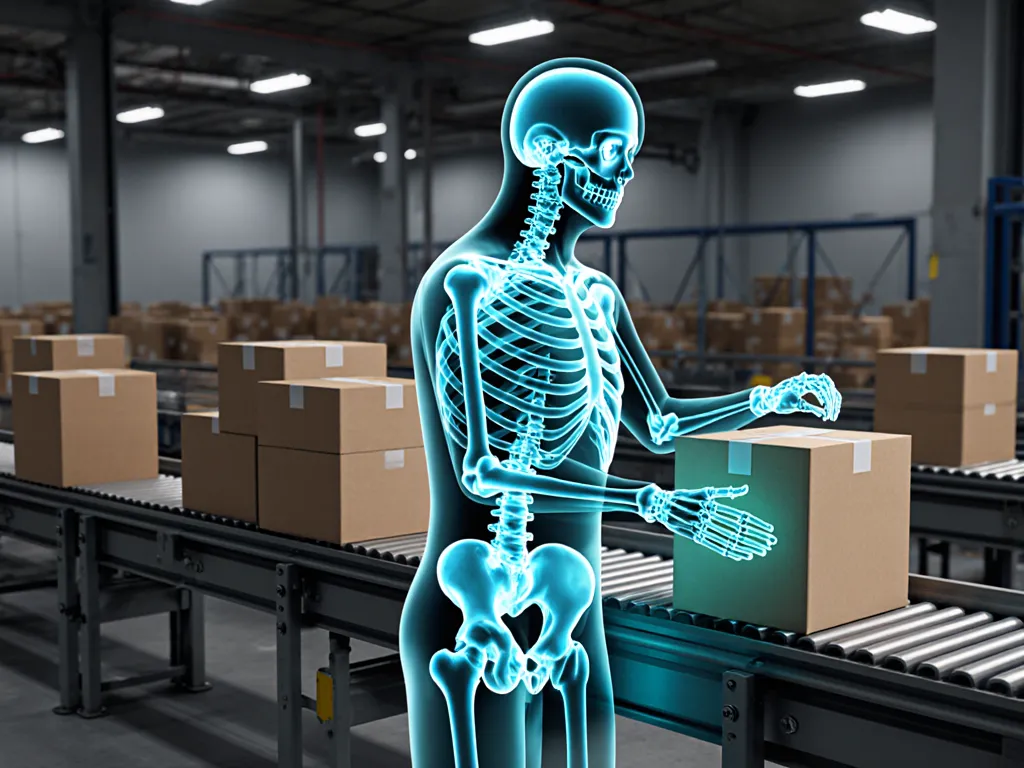
Use OCRA for fast-moving tasks with short cycle times and continuous hand and arm actions — assembly lines, packing, scanning, and keyboard-intensive data entry. It is assessed for the left and right limbs separately.
Primary citation: Colombini, D. & Occhipinti, E. (2002). Risk Assessment and Management of Repetitive Movements and Exertions of Upper Limbs (OCRA). Elsevier. (Occhipinti, 1998, Ergonomics 41(9), 1290–1311.)
What OCRA assesses
The body segments and task variables evaluated in a OCRA assessment.
Exposure factors assessed
- Technical action frequency — actions per minute of the dominant cycle
- Force exertion — level and duration during the cycle (Borg CR10)
- Awkward postures — shoulder, elbow, wrist, and hand positions
- Insufficient recovery — ratio of work to rest across the shift
- Complementary factors — vibration, contact stress, gloves, temperature
Scoring and action levels
Final score range: OCRA Checklist Index (OCLI)
Developed by: Occhipinti, 1998; Colombini & Occhipinti, 2002
Key characteristics
What makes OCRA the right tool for its intended use case.
Checklist (OCLI) implementation — Colombini & Occhipinti 2002
Covers force, frequency, posture, and recovery — not posture alone
Bilateral assessment — left and right limbs scored separately
Six-band classification from optimal to high-unacceptable
ISO 11228-3 aligned
How Ergocure.ai applies OCRA
Ergocure AI applies OCRA to repetitive-task captures via video time-sampling. Technical-action frequency is derived by counting movement cycles across sampled frames. Posture angle and force indicators are extracted from AI Vision analysis. Recovery periods are input via structured questionnaire. The OCRA Checklist Index is computed for each limb before ergonomist review.

Captured on any phone, scored for OCRA, and validated by a certified ergonomist — face-blurred on-device.
OCRA — frequently asked questions
What is OCRA (Occupational Repetitive Actions (Checklist))?
Quantify upper-limb exposure to repetitive, high-frequency manual work and predict the risk of work-related musculoskeletal disorders of the shoulder, elbow, wrist, and hand.
What is a good OCRA score?
OCRA Checklist Index (OCLI). A score of ≤ 5 is optimal — no action — while > 22.5 is high and means urgent redesign required.
When should you use OCRA?
Use OCRA for fast-moving tasks with short cycle times and continuous hand and arm actions — assembly lines, packing, scanning, and keyboard-intensive data entry. It is assessed for the left and right limbs separately.
How does Ergocure score OCRA?
Ergocure AI applies OCRA to repetitive-task captures via video time-sampling. Technical-action frequency is derived by counting movement cycles across sampled frames. Posture angle and force indicators are extracted from AI Vision analysis. Recovery periods are input via structured questionnaire. The OCRA Checklist Index is computed for each limb before ergonomist review.
Who developed OCRA?
OCRA was developed by Occhipinti, 1998; Colombini & Occhipinti, 2002. Colombini, D. & Occhipinti, E. (2002). Risk Assessment and Management of Repetitive Movements and Exertions of Upper Limbs (OCRA). Elsevier. (Occhipinti, 1998, Ergonomics 41(9), 1290–1311.)
Related assessment methods
Methods commonly used alongside OCRA in a complete ergonomic assessment.
See OCRA in a live assessment
Request a Pilot — we'll run OCRA with your team and deliver validated reports in 48 hours.