


RULA — Rapid Upper Limb Assessment
Assess exposure to risk due to posture, duration, frequency, and force for the upper limbs, neck, and trunk — particularly in sedentary, computer-intensive, or precision work.
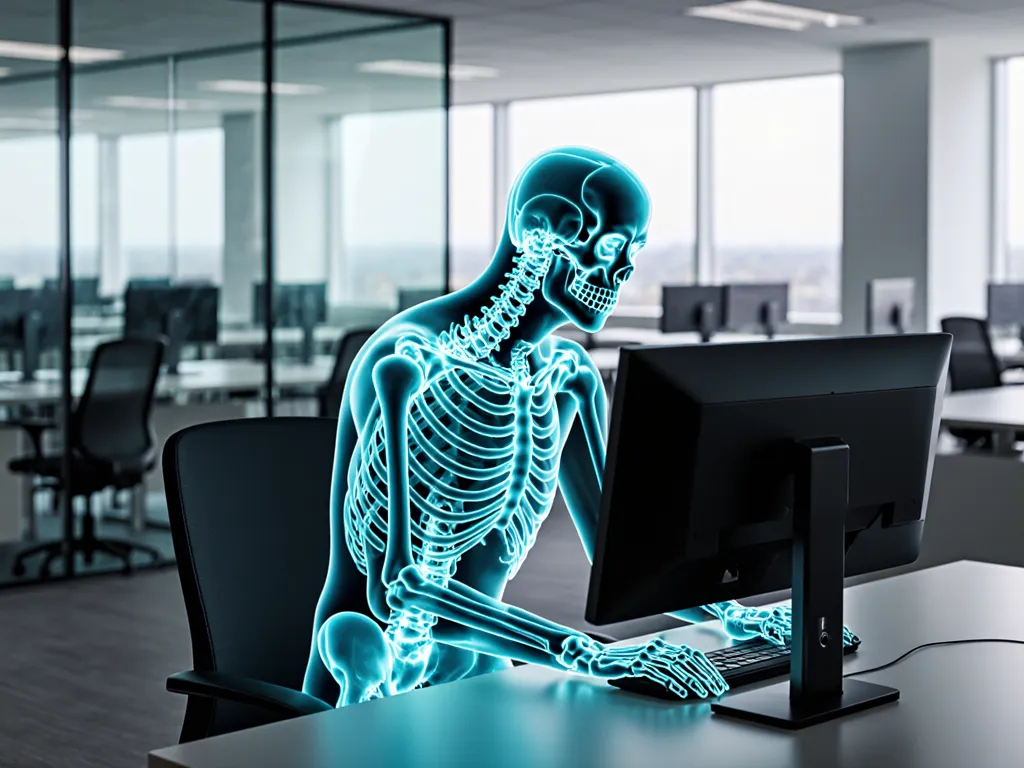
What is RULA?
RULA was one of the first rapid observational methods developed specifically for musculoskeletal disorder risk in upper limb-intensive work. It was created in 1993 by McAtamney and Corlett at the University of Nottingham, based on analysis of posture, force, and repetition. RULA provides a quick screen — selecting the highest-load postures and scoring both sides of the body independently.
When to use RULA
Use RULA for office workstation assessment, precision assembly, or any task where the arms, forearms, and wrists bear sustained or repeated load. It penalises static holds longer than 1 minute and cycles repeated more than 4 times per minute. It is the standard first-screen for computer-based work.
Primary citation: McAtamney, L. & Corlett, E.N. (1993). RULA: A survey method for the investigation of work-related upper limb disorders. Applied Ergonomics, 24(2), 91–99.
What RULA assesses
The body segments and task variables evaluated in a RULA assessment.
Group A — Arms, Forearms & Wrists
- Upper arm flexion/extension — adjusted for shoulder elevation, abduction, support
- Forearm flexion (60°–100° / outside range) — adjusted for midline crossing
- Wrist flexion/extension + radial/ulnar deviation — plus wrist rotation score
Group B — Neck, Trunk & Legs
- Neck flexion (0–10° / 10–20° / >20° / extension) — adjusted for rotation, lateral inclination
- Trunk flexion (upright / 0–20° / 20–60° / >60°) — adjusted for rotation, lateral inclination
- Leg support (well-supported bilateral / other)
Scoring and action levels
Final score range: RULA grand score 1–7
Developed by: McAtamney & Corlett, 1993
Key characteristics
What makes RULA the right tool for its intended use case.
Upper-limb focused — ideal for office and precision tasks
Scores both body sides independently
Combines postural, muscular, and force data
Four action levels from Acceptable to Urgent
Most widely validated method for computer/VDU work
How Ergocure.ai applies RULA
Ergocure AI computes RULA scores from front and side captures. Upper arm flexion/abduction, forearm flexion, wrist position, neck flexion, and trunk angle are all measured geometrically from pose landmarks. The RULA Group A and Group B tables are applied algorithmically, with activity-type and force adjustments derived from AI Vision analysis of the same frames. Both body sides are scored separately and the higher-risk side surfaces in the report.

Captured on any phone, scored for RULA, and validated by a certified ergonomist — face-blurred on-device.
RULA and your ISO 45001 audit
ISO 45001 Clause 6.1.2 requires you to assess ergonomic risk — and triggers the technical ISO standards this method runs. Your auditor names the standard; Ergocure runs the assessment and a qualified ergonomist signs it off.
How we assess it
RULA evaluates static upper-body working postures — the neck, trunk and upper-limb joint angles and hold times ISO 11226 sets acceptable limits for, plus the display-screen workstation factors ISO 9241 governs. Ergocure derives those joint angles from an on-device phone capture (or a structured camera-free survey), scores them with the validated RULA algorithm, and a qualified ergonomist reviews and signs off every result — the ISO 11226 / ISO 9241 evidence your ISO 45001 audit asks for.
See all ISO standards & how we assess themRULA — frequently asked questions
What is RULA (Rapid Upper Limb Assessment)?
Assess exposure to risk due to posture, duration, frequency, and force for the upper limbs, neck, and trunk — particularly in sedentary, computer-intensive, or precision work.
What is a good RULA score?
RULA grand score 1–7. A score of 1–2 is acceptable — acceptable if not maintained or repeated for long periods — while 7 is high and means immediate investigation and change.
When should you use RULA?
Use RULA for office workstation assessment, precision assembly, or any task where the arms, forearms, and wrists bear sustained or repeated load. It penalises static holds longer than 1 minute and cycles repeated more than 4 times per minute. It is the standard first-screen for computer-based work.
How does Ergocure score RULA?
Ergocure AI computes RULA scores from front and side captures. Upper arm flexion/abduction, forearm flexion, wrist position, neck flexion, and trunk angle are all measured geometrically from pose landmarks. The RULA Group A and Group B tables are applied algorithmically, with activity-type and force adjustments derived from AI Vision analysis of the same frames. Both body sides are scored separately and the higher-risk side surfaces in the report.
Who developed RULA?
RULA was developed by McAtamney & Corlett, 1993. McAtamney, L. & Corlett, E.N. (1993). RULA: A survey method for the investigation of work-related upper limb disorders. Applied Ergonomics, 24(2), 91–99.
Related assessment methods
Methods commonly used alongside RULA in a complete ergonomic assessment.
See RULA in a live assessment
Request a Pilot — we'll run RULA with your team and deliver validated reports in 48 hours.